
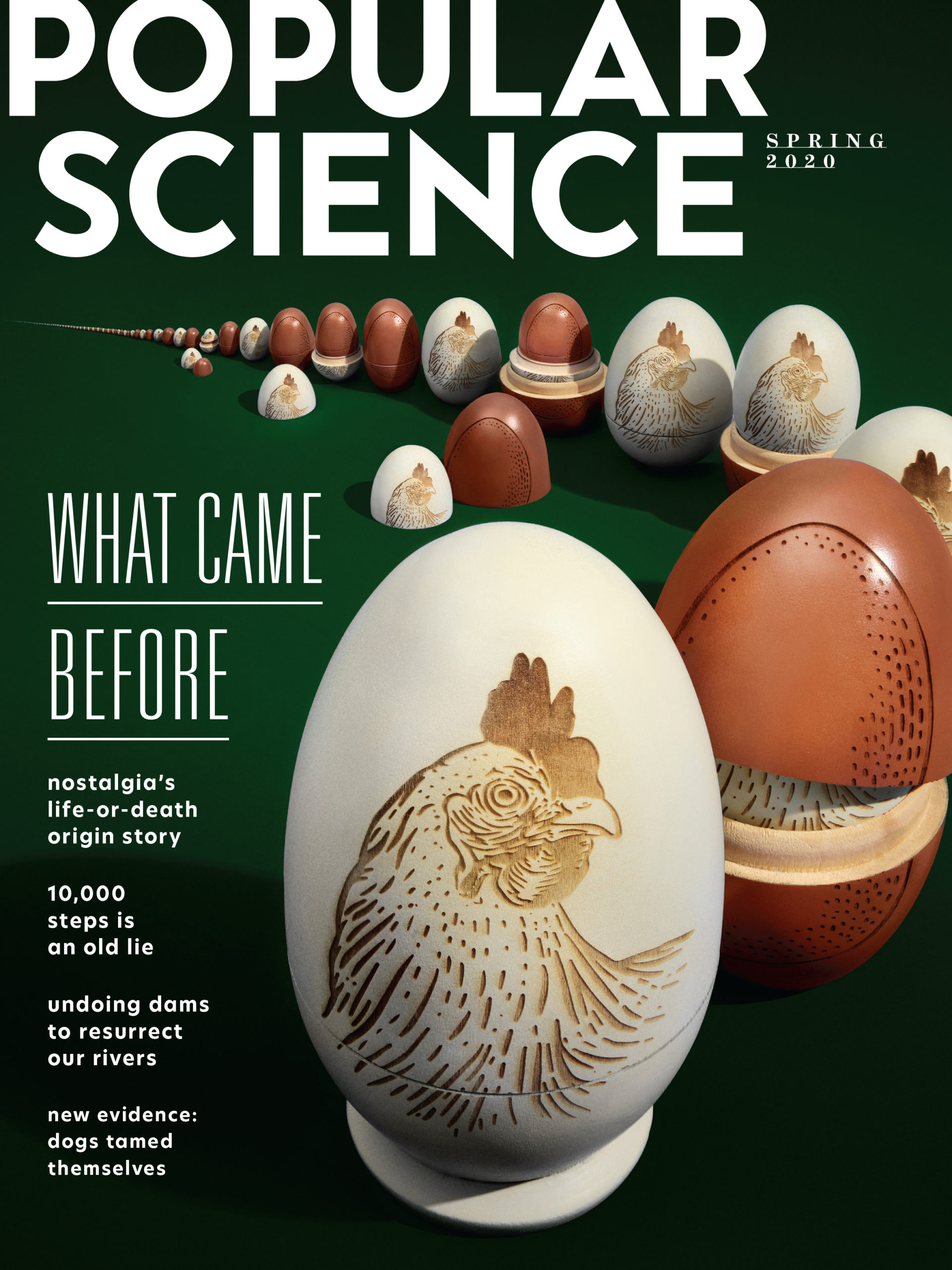

What Came Before?
The Origins Issue of Popular Science is available now.
THE MISSING MICROBE
An estimated 95 percent of Mongolians are, genetically speaking, lactose-intolerant. Yet in the frost-free summer months, they may be getting up to half their calories from milk products. PopSci chronicles archaeogeneticist Christina Warinner’s quest to get to the bottom of this. Warinner is convinced that the Mongolian affinity for dairy might be made possible by a mastery of bacteria 3,000 years or more in the making.
SHOULD RIVERS FLOW FREE ONCE AGAIN?
America was shaped by its rivers—more than 250,000 in all—and since Colonial times, we have bent them to our will. Dams fueled America’s growth by choking its rivers, but lately, people have started to notice the toll this has taken on wildlife. About 40 percent of the approximately 800 varieties of freshwater fish in the US, and more than two-thirds of native mussels, are rare or endangered, in part because man-made barriers have altered their ecosystems. Is it time to restore nature’s infrastructure?
AGE-OLD CLIMATE SOLUTIONS
Agriculture is the single largest contributor to greenhouse gas emissions. So, to curb their climate impact, farmers are turning back the clock to tap ancient techniques that catch more carbon than they spew. From a stead in North Carolina where 100 acres are dedicated to silvopasture (using trees to cover cow pasture and siphon CO2 from the sky) to a farm in Iowa that stopped plowing and begun planting cover crops, methods that help cancel out carbon emissions are gaining traction across the industry. This type of pollution trapping could get us most, if not all, of the way to the goals of the Paris Agreement. “I feel like I’m farming with a clear conscience,” says fifth-generation Iowa farmer Justin Jordan.
BIGGEST DIG EVER
The initial 143-mile leg of the UK’s HS2 high-speed rail project will connect London with northern towns en route to Birmingham, but it will also run through more than 60 historic sites. “It’s very difficult to dig a hole anywhere in the UK without finding something that directly relates to human history in these islands,” says archaeologist Caroline Raynor. From late Bronze Age settlements to a battlefield from the Wars of the Roses, HS2’s route is filled with history that researchers, archaeologists, excavators, and more are rushing to preserve and analyze—while also struggling to find space to hold it all.
PLUS: Dogs, a Love Story; How Do We Know What Dinosaurs Look Like?; Products that Were Perfect on Their First Try; Why Are We Nostalgic?; History of Garbage; and More